

The enduring tragedy of the 1888 Whitechapel archive is not found in
the dark, blood-slicked alleys of the East End, but in the pristine,
comfortably heated offices of Whitehall. For over a century,
traditional true-crime literature has treated the hunt for the phantom
killer as an orderly, methodical police investigation.
The historical reality preserves a far uglier—and bleakly comical—truth: the autumn of 1888 triggered a catastrophic systemic fracture between the
centralized, aristocratic administrators at the head of Scotland Yard
and the boots-on-the-ground detectives who actually had to look at the
bodies.
It was a bitter, ideological war over intelligence verification,
fought between men with dirt on their boots and men with tea on their
desks. Frontline investigators like Local Inspector Edmund Reid and
Chief Inspector Frederick Abberline worked with concrete biometric
descriptions, verified timelines, and field intelligence. Whitehall,
paralyzed by a multi-year operational failure that threatened to bring
down the political leadership of the Home Office, worked exclusively
in the currency of reputation management.
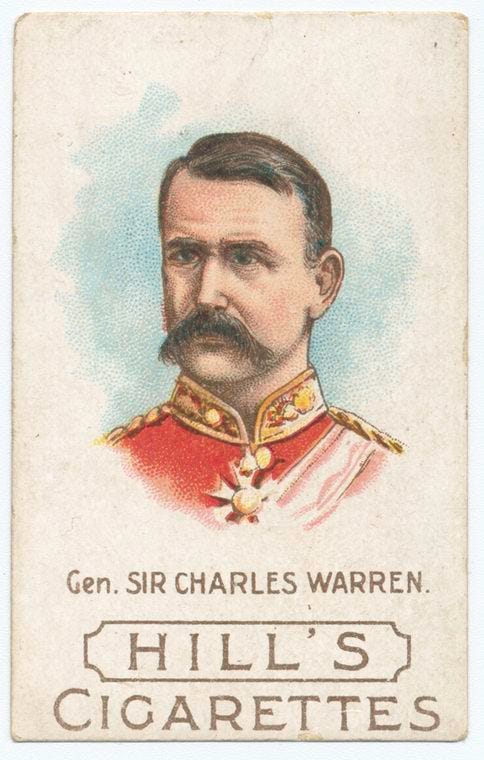
When Commissioner Sir Charles Warren ordered the vital Goulston Street graffiti trace washed away before it could be photographed, he wasn’t executing a forensic decision; he was executing a panicked corporate public relations pivot to avert a riot, effectively deciding that a clean wall was vastly
more important than a caught killer.
By 1894, this administrative panic reached a boiling point. The
Liberal government’s police apparatus was under relentless, mocking
assault from The Sun newspaper, which had published a massive,
multi-part expose screaming that an un-arrested South London cutter
named Thomas Cutbush was the true offender and that Scotland Yard was
covering up its total incompetence.
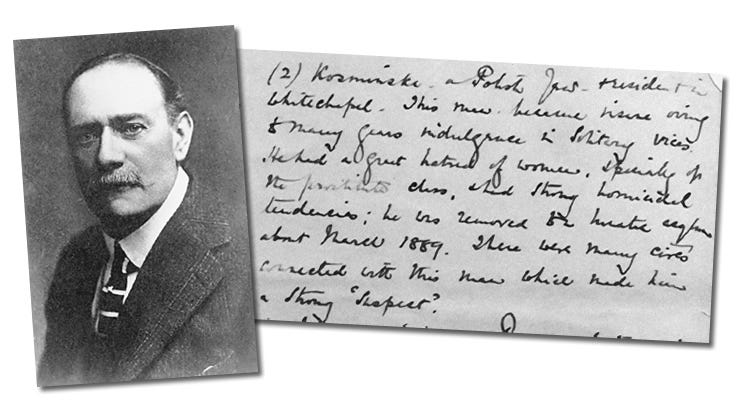
Enter Sir Melville Macnaghten.
Facing the immediate threat of a full parliamentary inquiry that could dismantle the Yard’s executive leadership and—heaven forbid—force them to look for real jobs, Macnaghten took up his pen.
He did not write his famous 1894 memorandum as an objective, cold-case criminological review. He wrote it as an emergency bureaucratic shield.
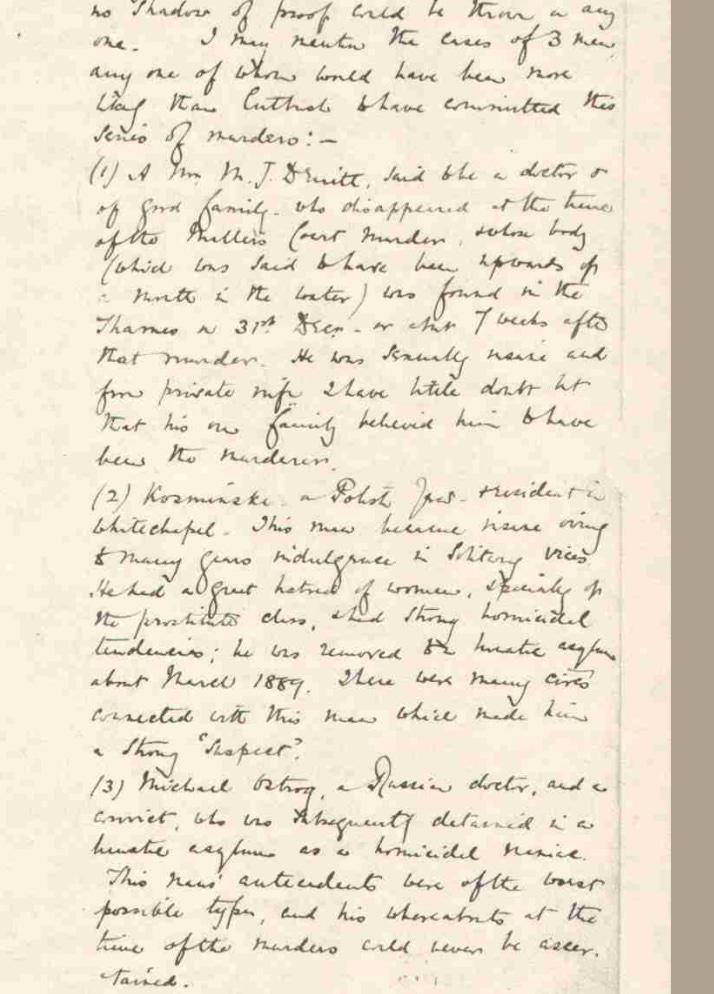
To permanently slam the archive shut and claim retrospective success,
the high office needed a closed, neutralized list of suspects.
Ideally, they needed men who were either locked behind the stone walls
of an asylum or, better yet, dead. Dead men are remarkably
cooperative; they do not write letters to the editor, they do not
demand legal representation, and they never cross-examine the
evidence. This structural requirement birthed the myth of the
“Macnaghten Three.”
At the absolute peak of this secret file, Macnaghten anchored his
state-level alibi using the name of a deceased gentleman barrister: Montague John Druitt.
The supreme deception of Macnaghten’s strategy lies in its raw, modern
cynicism. Although the formal industry of public relations did not
exist in late-Victorian England, Macnaghten intuitively operated as
the state’s first true “spin doctor.” He understood that a
catastrophic institutional failure cannot be buried by a simple
denial; it must be overwritten by a superior, more socially acceptable
narrative.
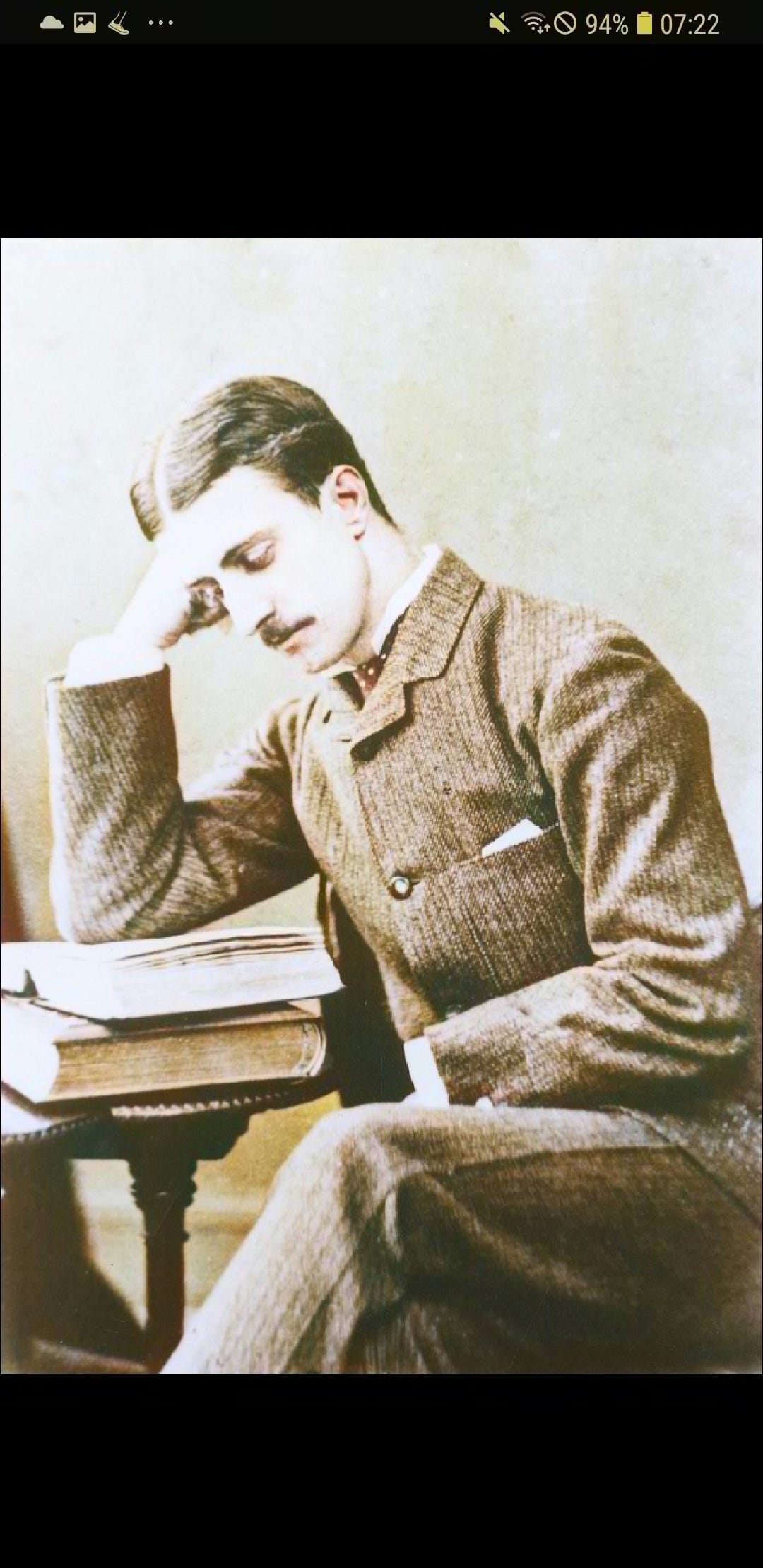
Montague Druitt was selected by Macnaghten as a highly convenient
suspect for one reason, and for that reason alone: he was dead.
Druitt was an Oxford-educated gentleman from an eminent medical family
who had tragically “drowned “ in December 1888, and his deft brother had
quietly managed his burial under a cloud of private domestic secrecy.
He was a profound structural vacuum. He could not sue for libel; he
could not stand in a courtroom to ask why his fifteen-year record of
perfectly stable, uniform handwriting was being ignored; he could not
issue a public statement from the bottom of the river. He was entirely
helpless against the state’s ink.
By taking this dead barrister and framing him under the polite,
medicalized euphemism of an “unsound mind,” Macnaghten executed a
brilliant PR spin. He neutralized the radical press by shifting the
entire historical narrative away from systemic police incompetence and
street-level detection failures, transforming it into a tragic,
unpredictable story of upper-class insanity. It was a beautifully
aristocratic solution: if the true monster was a brilliant gentleman
who was safely at the bottom of the Thames before Macnaghten even
walked into his office, then Scotland Yard was instantly absolved of
its failure to secure a conviction. The police hadn’t failed; the
elite had simply misbehaved.
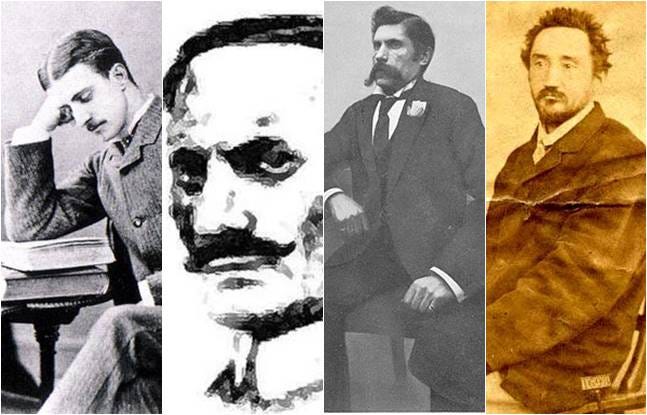
To give the file the illusion of a comprehensive investigation rather
than a rushed checklist, Macnaghten tossed in two immigrant
outcasts—Kosminski and Ostrog—to serve as institutional
counterweights. While Druitt shielded the state via the gentleman’s
code, the other two filled the standard, xenophobic requirements of
the era, sitting in the file as convenient placeholders of social
decay. They were the perfect administrative slush pile: men without
the social capital to fight back against the state’s pen.
Macnaghten was fundamentally wrong about all three, and he knew that. Ostrog was in France, under arrest, while poor Kosminski, another Polish Jew, crushed by the system, was in an asylum since 1891 . Mac thought in gothic tropes and social constructs. He wasn't looking for a culprit, he was trying to save the system.
The frontline detectives saw through the spin immediately. Chief
Inspector Abberline openly mutinied against this desk-bound list in
the press, stating flatly that the authorities were entirely blind and
that the true, clinically trained culprit was still walking the earth.
The men who actually held the physical trace evidence knew that the
high office had bypassed the true biometric clues—such as George
Hutchinson’s precise 1888 eyewitness description of the suspect’s
specialized surgical carry-wrap—strictly to protect the corporate
reputation of the force.
The predator won't be caught till 1903, and in that picture above he's staring right at you. Paraphrasing the old thing - lawyer, madman, conman…knife. While the police were looking for a top-hat shadow, a butcher, a half-devil, a bloody foreigner, the real invisible Mr. Hyde was hiding in plain sight, on Cable street, swirling his magnificent moustache - and his name was Seweryn Klosowski. He was a barber, a hairdresser, but once upon a time in his native Poland he has been a junior surgeon. But Abberline’s exhausted gaze spotted him only years later, because Seweryn wasn't your ordinary guy. He was clever, he was as sharp as the Caitlin knife. But more on him later.
The tragedy of the Whitechapel archive is that the truth was
systematically sacrificed to preserve a bureaucratic truce.
Macnaghten’s memorandum was never a piece of history; it was the birth
of a century-old misdirection, using the manufactured alibi of a dead
gentleman to build an unyielding shield for the state.
I love your historical writes!!!